01Week 1
Frame
Map the jobs worth automating, the decisions that must stay human, and the one metric that defines success.
Lopezi designs, builds and governs agentic products — from the interface people rely on to the protocols agents speak.
The model is no longer the bottleneck. Trust, legibility and cost are. The moment AI stops answering and starts acting, design becomes infrastructure — and that is exactly where we work.
of organisations already run agents on multi-stage workflows.
Anthropic · State of AI Agents, 2026
companies has a mature governance model for autonomous agents.
Deloitte · State of AI in the Enterprise, 2026
of teams running production agents in I&O will face a material incident from weak runtime controls by 2029.
Gartner · forecast
— Practice
When software acts on its own, the interface becomes a contract. We design how agents show their plan, ask for permission, explain a decision and hand control back — so people stay in charge without micromanaging.
Multi-agent systems on production-grade harnesses: orchestration, tools, memory and state that survive real traffic. We ship coding, research, operations and customer-facing agents that complete multi-step work end to end.
Agents are becoming your next customers and your next integrators. We expose products through MCP servers, A2A agent cards and WebMCP, make content machine-negotiable, and prepare checkout for agentic commerce.
Autonomy is only as good as the controls beneath it. We build what lets you say yes to agents: evaluation suites, policy enforced below the model, agent identity, audit trails and circuit breakers.
Token spend is only the visible part of AI cost. We route every task to the smallest model that passes the evals, cache and batch aggressively, and measure cost per outcome — not per call — so AI scales with margin.
— Method
Map the jobs worth automating, the decisions that must stay human, and the one metric that defines success.
Clickable agent flows with real models behind them. We test trust and recovery, not just usability.
Production harness, tools, memory and interface — shipped in weekly increments you can use.
Eval suites become release gates. Every change is measured on quality, safety, cost and latency.
Tracing, drift monitoring and model upgrades, so the system keeps improving long after launch.
— Proof
A decade of enterprise product work for Lufthansa, Allianz and Siemens — now applied to systems that act on their own.




Case study · Lufthansa
From design system to production code for one of Europe's premier airlines: faster booking, fewer drop-offs and a foundation built to evolve.
— Journal
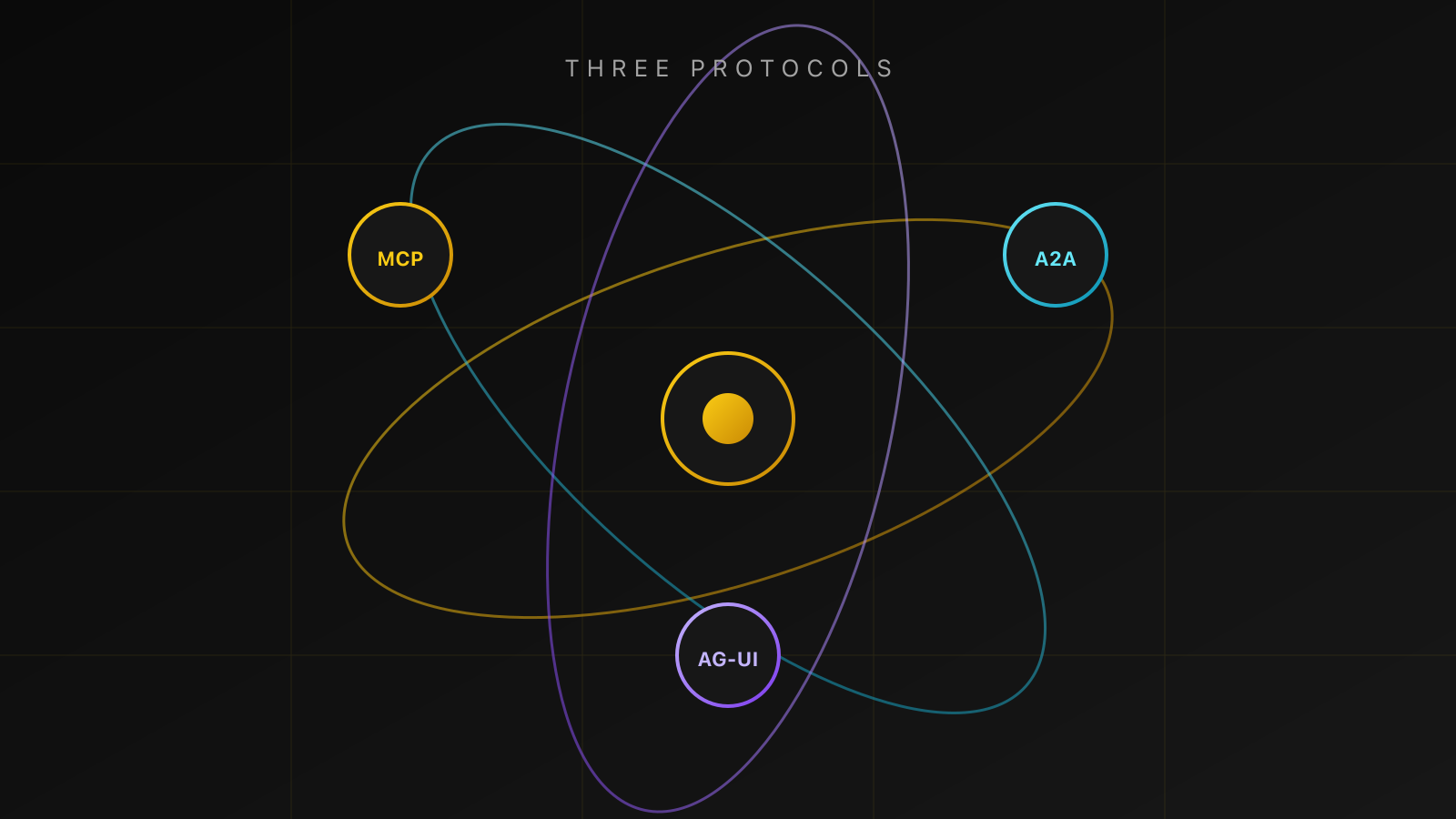
Agents need three open contracts to leave demos behind: tools (MCP), peers (A2A), and people (AG-UI). Here is how the stack fits together — and what to ship first.
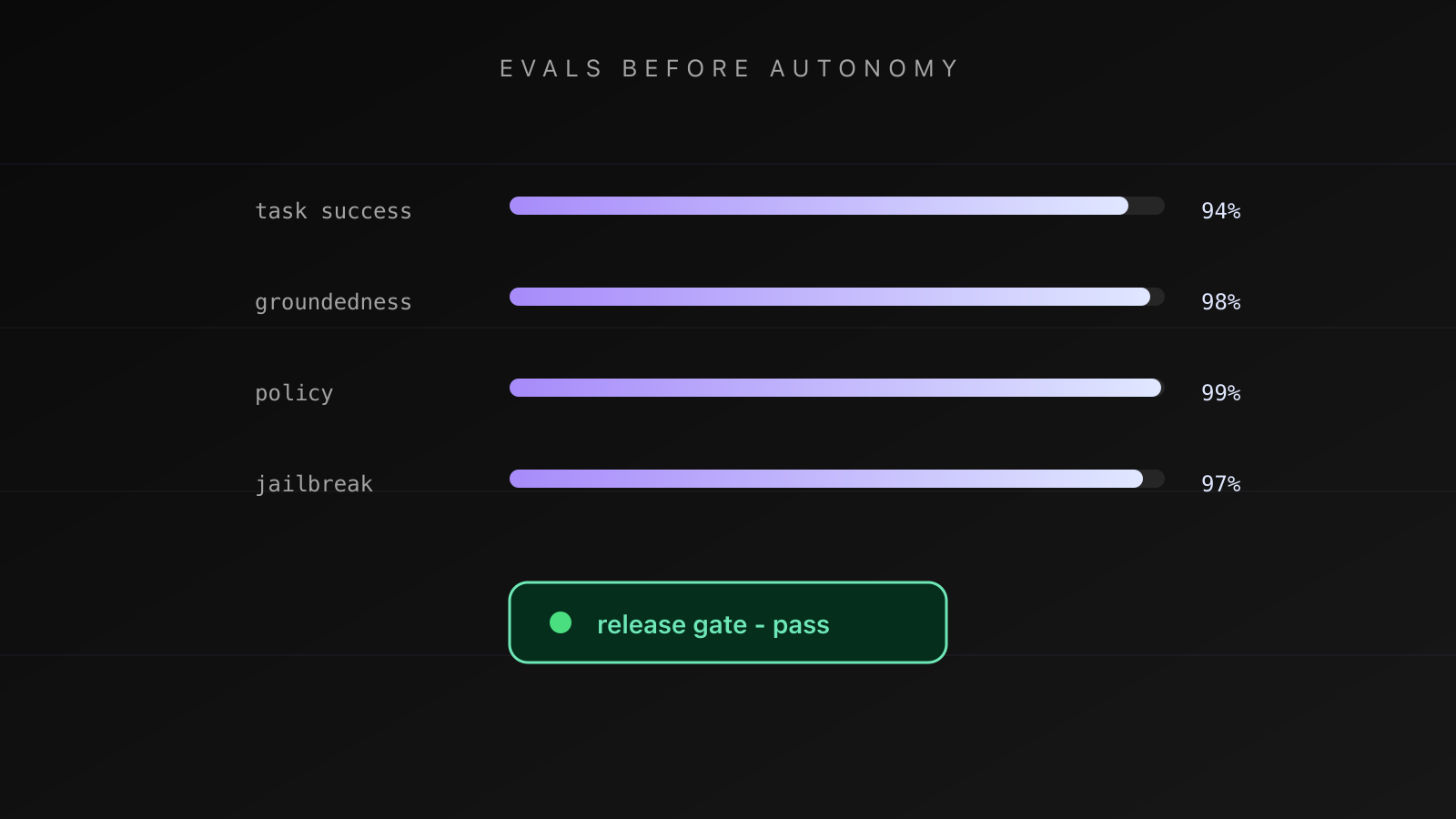
Agentic AI fails where governance stops. Written policies cannot catch a runaway tool call — only eval suites, release gates, and runtime controls can. Here is a practical stack.
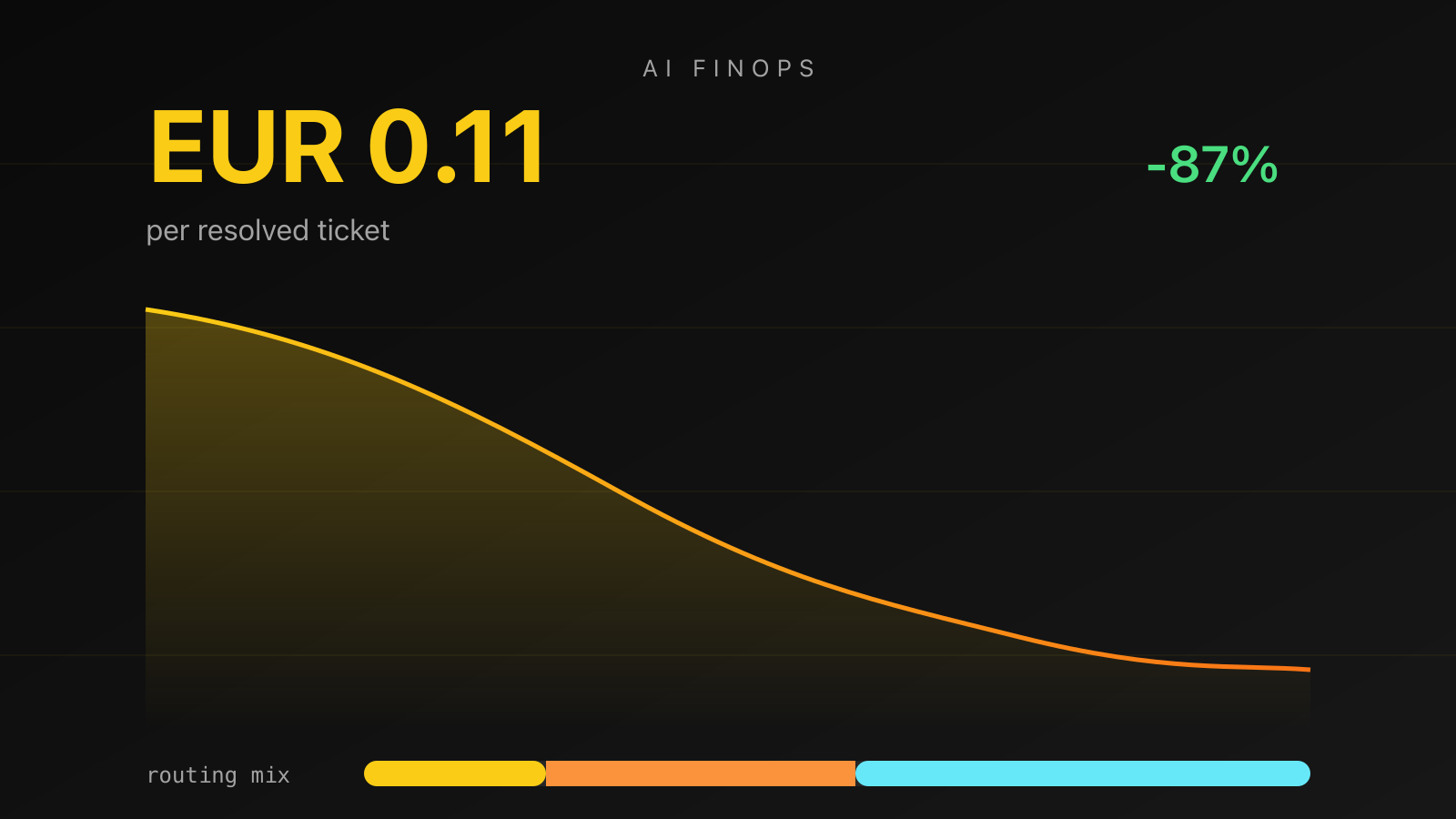
Token spend is the visible tip of AI cost. Routing, caching, and the right small model turn a €0.84 ticket into €0.11 — without lowering quality if evals hold the line.
— Next
A 30-minute call. We'll map one workflow worth handing to an agent — and what it would take to trust it.